Intelligence
What Are the Five Eyes? The World’s Most Powerful Intelligence Alliance
The Five Eyes alliance connects five nations in the world’s most powerful intelligence-sharing partnership. Here’s how it started and why it matters.
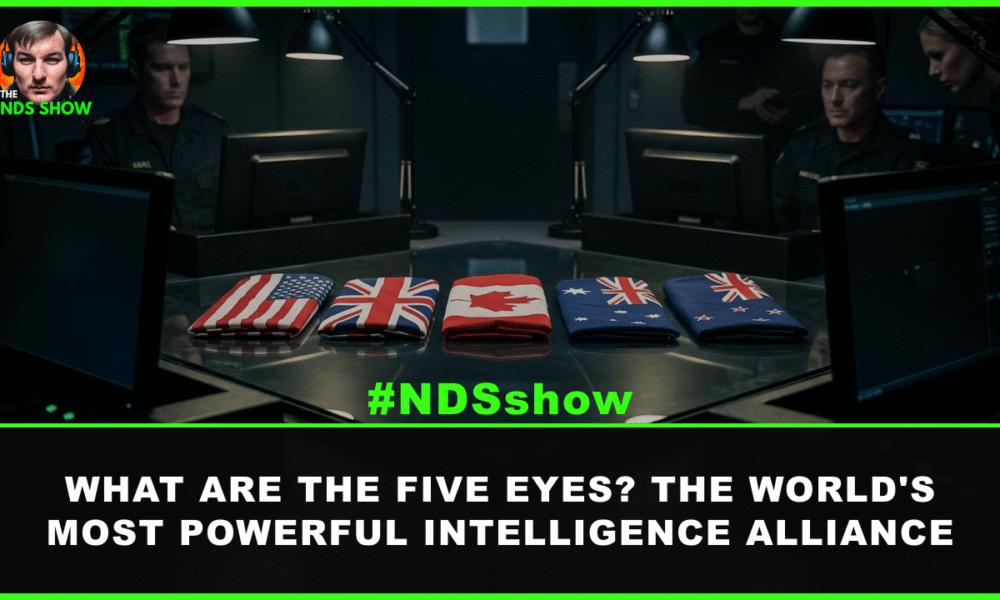
If you spend any time reading about national security or intelligence, you have probably come across the term “Five Eyes.” It sounds like something out of a spy novel, and honestly, the real story is just as fascinating. The Five Eyes is the longest-running and most powerful intelligence-sharing alliance in modern history, connecting five English-speaking nations in a partnership that has shaped global security for nearly 80 years.
So what exactly is the Five Eyes, how did it start, and why does it still matter today? Let us break it down.
The Origins: Code-Breakers and World War II
The Five Eyes alliance traces its roots back to 1941, when American intelligence officials visited Bletchley Park in England. Bletchley Park was the nerve center of Allied code-breaking operations during World War II. The Americans shared their breakthrough work cracking Japan’s Purple cipher, and the British revealed their success with Germany’s Enigma machine. It was a handshake built on mutual need and mutual trust.
That wartime cooperation proved so valuable that neither side wanted to give it up. In March 1946, just months after the war ended, the United States and United Kingdom signed the British-U.S. Communication Intelligence Agreement (BRUSA, later renamed UKUSA). The agreement formalized their intelligence-sharing relationship, with both countries promising transparency and a commitment not to spy on each other.
By 1955, three more countries had formally joined: Canada, Australia, and New Zealand. All three were former British dominions with deep cultural and political ties to the UK. Together, t hese five nations formed what we now call the Five Eyes, often abbreviated as FVEY.
What Does the Five Eyes Actually Do?
At its core, the Five Eyes is a signals intelligence (SIGINT) sharing arrangement. Each member nation collects intelligence through electronic surveillance, intercepted communications, and cyber operations, then shares relevant findings with the other four. The idea is simple: five countries working together can cover far more ground than any single nation acting alone.
Each member brings unique geographic and technical strengths to the table. The United States, through the NSA, has the largest surveillance budget and the most sophisticated technology. The UK’s GCHQ brings deep expertise in traditional espionage, aided by historical relationships across former British Empire territories. Australia’s signals intelligence agency (ASD) focuses heavily on Southeast Asia and the South Pacific. Canada’s CSE covers the Arctic and parts of Latin America. New Zealand’s GCSB monitors the South Pacific region.
Together, these agencies operate a network of listening stations, satellite intercept facilities, and cyber operations centers that span the globe. During the Cold War, this network was primarily focused on monitoring Soviet communications. Today, it covers everything from counterterrorism to cyber threats to monitoring the activities of strategic competitors like China and Russia.
Beyond Five Eyes: Nine Eyes and Fourteen Eyes
While the Five Eyes represents the inner circle, the alliance has expanded into broader tiers of cooperation over the dec ades. The Nine Eyes adds France, Denmark, the Netherlands, and Norway. The Fourteen Eyes adds Belgium, Germany, Italy, Spain, and Sweden. These outer rings share intelligence in a more limited fashion, but they extend the alliance’s reach across Europe and beyond.
There is an ongoing debate about whether the Five Eyes should expand further. A 2025 article in Lawfare argued that the alliance “can’t afford to stay small,” pointing out that cyber threats don’t respect the boundaries of five Anglophone nations. Cyberattacks traverse continents in seconds, and the digital ecosystem has outgrown the reach of any single jurisdiction. Some analysts advocate bringing in countries like Japan, South Korea, or NATO allies as closer partners to address modern threats.
The Snowden Revelations and Public Awareness
For decades, the Five Eyes operated almost entirely in the shadows. Most people had never heard of it. That changed dramatically in 2013 when former NSA contractor Edward Snowden leaked thousands of classified documents revealing the scope of Five Eyes surveillance programs.
The leaked documents showed that the alliance had developed sophisticated tools for intercepting internet traffic, phone calls, and metadata on a massive scale. Programs like PRISM and XKeyscore became household names overnight. The revelations sparked a global debate about the balance between national security and individual privacy that continues to this day.
Supporters of the alliance argue that these capabilities are essential for preventing terrorist attacks and countering hostile foreign intelligence operations. Critics contend that mass surveillance overreaches, potentially violating the civil liberties of millions of ordinary citizens in allied countries. Both sides make valid points, and this tension remains one of the central challenges facing democratic intelligence agencies.
Why the Five Eyes Still Matters in 2026
Nearly 80 years after that first handshake at Bletchley Park, the Five Eyes alliance remains one of the most consequential partnerships in global security. Its relevance has only grown as the threat landscape has evolved. Cybersecurity challenges, artificial intelligence, space-based intelligence collection, and the rise of great power competition have all reinforced the value of close cooperation between trusted allies.
The alliance also serves as a model for how democracies can work together on intelligence without compromising their sovereignty. Each member retains full control over its own intelligence agencies and operations. What they share is the product of those operations, giving each nation a far broader picture of global threats than it could ever develop alone.
Key Takeaways
- The Five Eyes is an intelligence-sharing alliance between the US, UK, Canada, Australia, and New Zealand, founded during World War II and formalized in 1946.
- Each member contributes unique geographic coverage and technical expertise, creating a global signals intelligence network.
- Broader tiers like Nine Eyes and Fourteen Eyes extend cooperation to European allies, and there are growing calls to expand the alliance further.
- The 2013 Snowden revelations brought the alliance into public view and sparked ongoing debates ab out surveillance and privacy.
Watch the Full Episode
For a deeper dive into intelligence sharing and why it matters, check out this episode of The NDS Show:

🎙️ Don’t Miss an Episode of The NDS Show
Stay informed on national defense, intelligence, and geospatial topics. Subscribe to The NDS Show on YouTube for in-depth interviews and analysis.