
Military
Directed Energy Weapons: The Invisible Arsenal Reshaping Modern Warfare
From Navy laser destroyers to Havana Syndrome, directed energy weapons are here. We break down every type, where they have been used, and what the evidence actually shows.
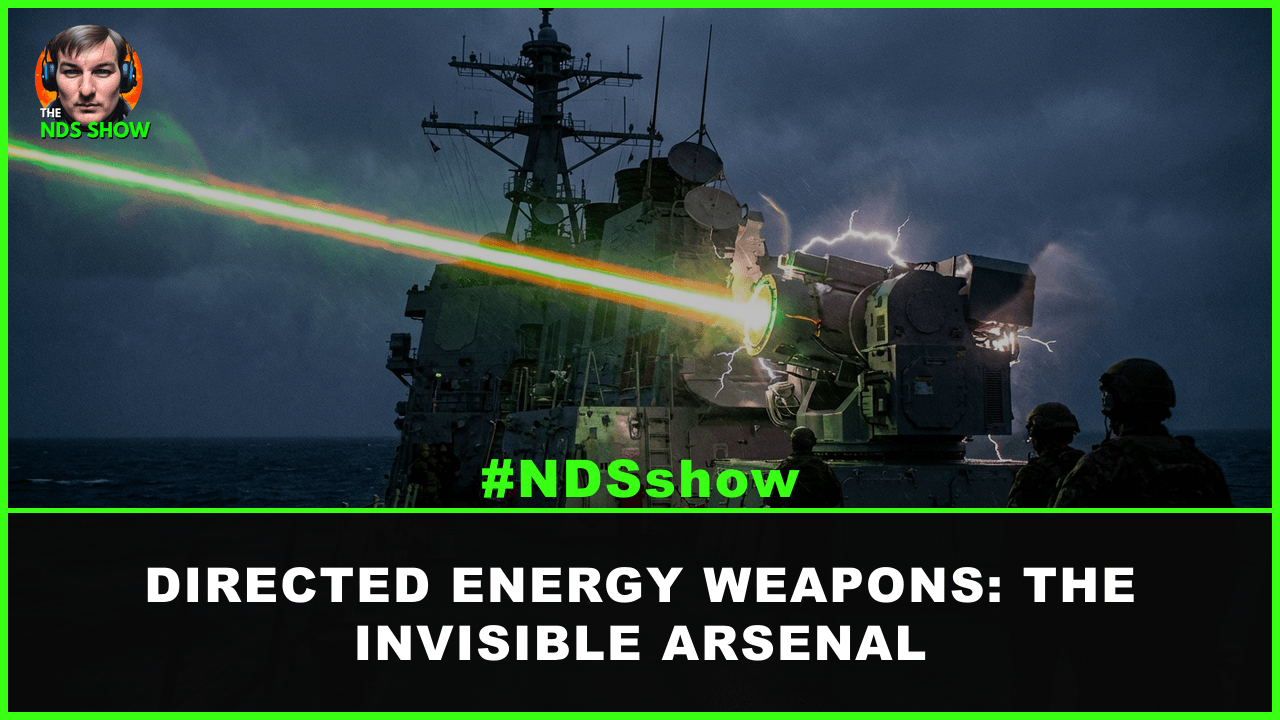
Imagine a weapon that strikes at the speed of light, costs about a dollar per shot, and leaves no bullet behind. That’s not science fiction. Directed energy weapons are real, they’re deployed by militaries around the world, and some may have already been used against Americans on U.S. soil.
From the decks of Navy destroyers to mysterious attacks on U.S. diplomats in Havana, directed energy weapons have quietly become one of the most consequential and controversial technologies in modern defense. Here’s everything you need to know.
What Exactly Is a Directed Energy Weapon?
A directed energy weapon (DEW) uses highly focused energy to damage, disable, or destroy targets. Instead of firing a bullet or missile, it projects electromagnetic radiation, sound waves, or particle beams at or near the speed of light. The Department of Defense defines them as systems that use “concentrated electromagnetic energy, rather than kinetic energy, to incapacitate, damage, disable, or destroy enemy equipment, facilities, and/or personnel.”
Think of it this way: a conventional weapon carries its destructive power in mass and velocity. A directed energy weapon delivers that power as pure energy. The tactical advantages are significant. Speed-of-light engagement means no lead time on targets. Cost per shot runs about $1 in electricity versus tens of thousands of dollars for a missile. And the magazine is effectively unlimited as long as you have power.
The limitations are real too. Rain, fog, and dust can scatter laser beams. These systems demand enormous power supplies. And unlike a bullet, a laser beam typically needs to dwell on a target for several seconds to do damage.
The Five Types of Directed Energy Weapons
1. High-Energy Lasers (HEL)
These are the DEWs most people picture. Modern military lasers use solid-state technology powered by electricity to generate a coherent beam of photons intense enough to burn through metal, melt sensors, or detonate ordnance. The U.S. Navy’s HELIOS system operates at 60+ kilowatts and can down drones in seconds. At lower power, lasers can “dazzle” optical sensors or temporarily blind personnel. The cost per shot? Roughly one dollar.
2. High-Power Microwave (HPM)
HPM weapons emit intense bursts of radio frequency energy that penetrate electronic systems and fry circuits from the inside. The key advantage over lasers: they can engage wide areas simultaneously. A single HPM burst can disable an entire drone swarm at once. The Air Force’s THOR system fits in a shipping container and can be assembled by two people in under three hours. At weapon power levels, microwave energy can also cause severe internal burns and neurological effects in humans.
3. Millimeter-Wave Weapons
Operating at 95 GHz, millimeter-wave weapons penetrate only about 1/64th of an inch into human skin, right where the pain receptors sit. The result is an intense burning sensation that forces immediate retreat without causing lasting tissue damage at designed power levels. The U.S. military’s Active Denial System (ADS) uses this technology and was designed as a non-lethal crowd control tool. It was shipped to Afghanistan around 2010 but was immediately withdrawn before use due to controversy.
4. Particle Beam Weapons
These accelerate subatomic particles to near-light speed. When the beam hits a target, the kinetic energy transfer creates extreme heating and radiation damage. Particle beams can even penetrate solid material and distinguish real warheads from decoys based on their radiation signatures. The technology dates back to Reagan’s Strategic Defense Initiative (“Star Wars”) in the 1980s. The DoD pursued space-based particle beams for missile defense but shelved the program in 2019. This category remains largely in the research phase.
5. Acoustic and Sonic Weapons
The Long Range Acoustic Device (LRAD) generates a tight beam of high-intensity sound up to 153 decibels that can cause permanent hearing damage at sustained exposure. Originally designed as a communications device for the military, LRADs have been used domestically by U.S. law enforcement during protests, including the 2020 demonstrations and Standing Rock. A federal court ruled in 2017 that NYPD’s use of LRAD sound cannons against protesters constituted excessive force.
U.S. Military DEW Systems: What’s Deployed Right Now
The United States spends roughly $1 billion per year on directed energy weapons, and the number of operational systems is growing fast. Here’s what’s in the field:
Navy: The HELIOS laser (60+ kW, built by Lockheed Martin) was installed on the destroyer USS Preble and successfully downed drones in live-fire tests in 2024 and 2025. The Navy also has ODIN laser dazzlers on eight destroyers and a 150 kW demonstrator on the USS Portland. Earlier, the 30 kW LaWS system deployed on the USS Ponce in the Persian Gulf in 2014, proving the concept works in real-world conditions.
Air Force: THOR, the microwave-based counter-drone system, demonstrated its ability to down drone swarms at Kirtland AFB in 2023. Leidos won a $26 million contract for Mjölnir, the production-ready follow-on. The Air Force also fields Raytheon’s PHASER HPM system ($16.2 million per unit), which was the first directed energy weapon deployed overseas.
Army: The DE-SHORAD (Directed Energy Short Range Air Defense) system mounts a 50 kW laser on a Stryker vehicle for mobile air defense against drones, rockets, and mortars. Epirus’s Leonidas HPM system provides wide-area counter-drone capability for ground forces.
Key defense contractors in this space include Lockheed Martin, RTX (Raytheon), Northrop Grumman, Boeing, L3Harris, Epirus, and BAE Systems. According to the GAO, DoD requested $962.4 million for DEW programs in FY2024, but Congress appropriated $1.1 billion. The FY2025 request dropped to $789.7 million.
Havana Syndrome: The Mystery That Changed Everything
In late 2016, U.S. and Canadian diplomatic personnel stationed in Havana, Cuba, began reporting bizarre and debilitating symptoms: hearing loss, intense pressure in the head, dizziness, nausea, and cognitive difficulties. What started as a handful of cases in Cuba mushroomed into a global phenomenon affecting more than 1,500 U.S. government personnel across dozens of countries.
The numbers tell the story of how widespread this became:
- ~1,000 cases investigated by the CIA alone (per Director Burns, January 2022)
- 1,500+ total U.S. officials reporting symptoms globally by end of 2022
- 334 personnel qualified for military medical care (GAO, July 2024)
- Incidents confirmed in Cuba, China, Russia, Austria, Colombia, India, Germany, Serbia, Poland, Washington D.C., and more
The Vienna cluster in 2021 was particularly alarming, with roughly 50 cases at the U.S. Embassy. But the most unsettling incidents may have happened on American soil. In 2019, a White House National Security Council official reported symptoms while walking her dog in Arlington, Virginia. In November 2020, another incident was reported near The Ellipse, steps from the White House.
What Investigations Found (and Didn’t)
The investigation into Havana Syndrome has been one of the most contentious intelligence debates in recent history. Here’s where the evidence stands:
In December 2020, the National Academies of Sciences concluded that “directed, pulsed radio frequency energy” was the “most plausible mechanism” for the symptoms. That finding made headlines worldwide, but it’s important to note what the report actually said: pulsed RF energy was consistent with symptoms. It did not confirm it as the cause, and the JASON advisory group (an elite scientific panel) later called the microwave hypothesis “highly unlikely” from a physics standpoint.
In March 2023, the Office of the Director of National Intelligence assessed it was “very unlikely” a foreign adversary was responsible, with five of seven intelligence agencies agreeing. But one agency (reportedly the NSA) dissented, saying there was a “roughly even chance” of foreign involvement. By December 2024, the Senate Intelligence Committee accused the CIA of mishandling investigations and lacking “analytic integrity.”
Then came the bombshell. In April 2024, a joint investigation by The Insider, CBS 60 Minutes, and Der Spiegel linked incidents to Russia’s GRU Unit 29155, the same unit responsible for the Novichok poisoning of Sergei Skripal. The investigation found that senior unit members had received awards for developing “non-lethal acoustic weapons” and that unit operatives were present at locations where victims were struck.
In January 2026, CBS News and CNN reported that the Pentagon had secretly purchased a device through an undercover DHS Homeland Security Investigations operation, reportedly costing over $10 million. The device is believed capable of reproducing symptoms consistent with Anomalous Health Incidents.
The HAVANA Act, signed into law by President Biden in October 2021, authorized the CIA and State Department to provide financial support to affected personnel. Attorney Mark Zaid, who represents many victims, testified before Congress in May 2024 that “numerous federal agencies have failed to fully undertake substantive investigations.”
LRAD on American Streets
While Havana Syndrome remains debated, there’s one category of directed energy weapon that has been unambiguously used on American soil: the LRAD sound cannon. Originally developed for military use, LRADs have been deployed by U.S. law enforcement agencies against protesters on multiple occasions, including during the 2020 George Floyd demonstrations and at Standing Rock in 2016. A federal court ruled in 2017 that the NYPD’s use of LRAD against Occupy Wall Street protesters constituted excessive force.
The Active Denial System, the military’s millimeter-wave “heat ray,” was also reportedly considered for use against protesters at Lafayette Square in Washington, D.C. in June 2020, though it was ultimately not deployed. It was shipped to Afghanistan around 2010 but withdrawn before use. The system has been used in at least one U.S. prison setting.
The Global DEW Arms Race
The United States isn’t alone. At least 31 nations are developing directed energy weapons, according to a 2021 Air Force report. Here’s where the major players stand:
Russia unveiled the Peresvet laser system in 2018, declaring it combat-ready by January 2019. It’s reportedly deployed at ICBM bases for satellite and sensor dazzling. Russia also developed the Ranets-E high-power microwave system (claimed 10 km range against cruise missiles) and the Stupor anti-drone EW rifle, which has been confirmed in Syria. The GRU’s alleged development of a covert pulsed RF weapon remains under investigation.
China has been aggressive. Chinese forces blinded a U.S. helicopter crew in Djibouti with a military laser in 2018 and dazzled Australian military aircraft in 2019. The PLA operates 30 kW-class anti-drone lasers, and the DoD’s annual China Military Power Report confirms development of ground-based lasers capable of damaging satellites. China’s ZKZM-500 “laser rifle” made headlines in 2018 but was widely dismissed by Western physicists as physically impossible at the claimed specifications.
Israel made history with Iron Beam (also called Laser Dome), a 100 kW laser defense system developed by Rafael. In October 2024, Iron Beam achieved the first confirmed combat use of a high-energy laser, engaging Hamas rockets and drones. The system became fully operational in December 2025. Cost per shot: roughly $3, compared to $50,000 for an Iron Dome interceptor missile.
Turkey claims the first military DEW combat use between armed forces, stating its ALKA system destroyed a Chinese-made Wing Loong II drone in Libya in August 2019. The UK unveiled the DragonFire 50 kW laser in May 2024, with plans to deploy on Royal Navy ships by 2027. India’s DRDO demonstrated a 30 kW laser drone kill in 2025 trials.
What About Conspiracy Theories?
The August 2023 Lahaina wildfire in Maui generated widespread claims that directed energy weapons started the fire. Viral posts alleged satellite-mounted lasers targeted the town and that “only blue objects survived.” These claims have no credible evidence supporting them. Official investigations attributed the fire to downed power lines in high winds, consistent with extensive forensic analysis. The “blue objects survived” claim is based on misidentified photos and a misunderstanding of how lasers interact with materials.
Separately, thousands of Americans identify as “targeted individuals” who claim they’re being attacked with DEWs by the government. The FBI and academic researchers have found no credible evidence of any systematic DEW program targeting private citizens. Most researchers classify these claims as a form of persecutory delusion, though they acknowledge that real programs like Havana Syndrome, LRAD, and ADS complicate blanket dismissals.
International Law: Are DEWs Legal?
The 1995 Protocol on Blinding Laser Weapons, to which the United States is party, specifically prohibits laser weapons designed to cause permanent blindness. Beyond that, DEWs exist in a legal gray area. They’re generally subject to the same laws of armed conflict as any other weapon: they must distinguish between combatants and civilians, minimize unnecessary suffering, and be proportional. Using a microwave weapon covertly against diplomats, if proven, would violate multiple international norms and treaties.
Key Takeaways
- DEWs are operational now. Israel’s Iron Beam scored the first confirmed combat laser kill in October 2024. The U.S. Navy has lasers on destroyers. At least 31 nations are developing these weapons.
- The U.S. spends $1 billion+ annually on directed energy weapons across the Army, Navy, Air Force, and DARPA, with key systems from Lockheed Martin, Raytheon, and Epirus.
- Havana Syndrome remains unresolved. Over 1,500 U.S. personnel have reported symptoms. Evidence points toward Russia’s GRU, but intelligence agencies remain split. The Pentagon secretly acquired a suspected device in January 2026.
- LRADs have been used on Americans. Law enforcement has deployed acoustic weapons against protesters on U.S. soil, with courts ruling some uses constituted excessive force.
- The technology is advancing fast. The DoD’s roadmap targets megawatt-class weapons by FY2026. Cost per shot remains a fraction of traditional munitions, making these weapons increasingly attractive.
Watch the Full Episode
For more in-depth coverage of defense technology and national security, check out The NDS Show:
🎙️ Don’t Miss an Episode of The NDS Show
Stay informed on national defense, intelligence, and geospatial topics. Subscribe to The NDS Show on YouTube for in-depth interviews and analysis.


