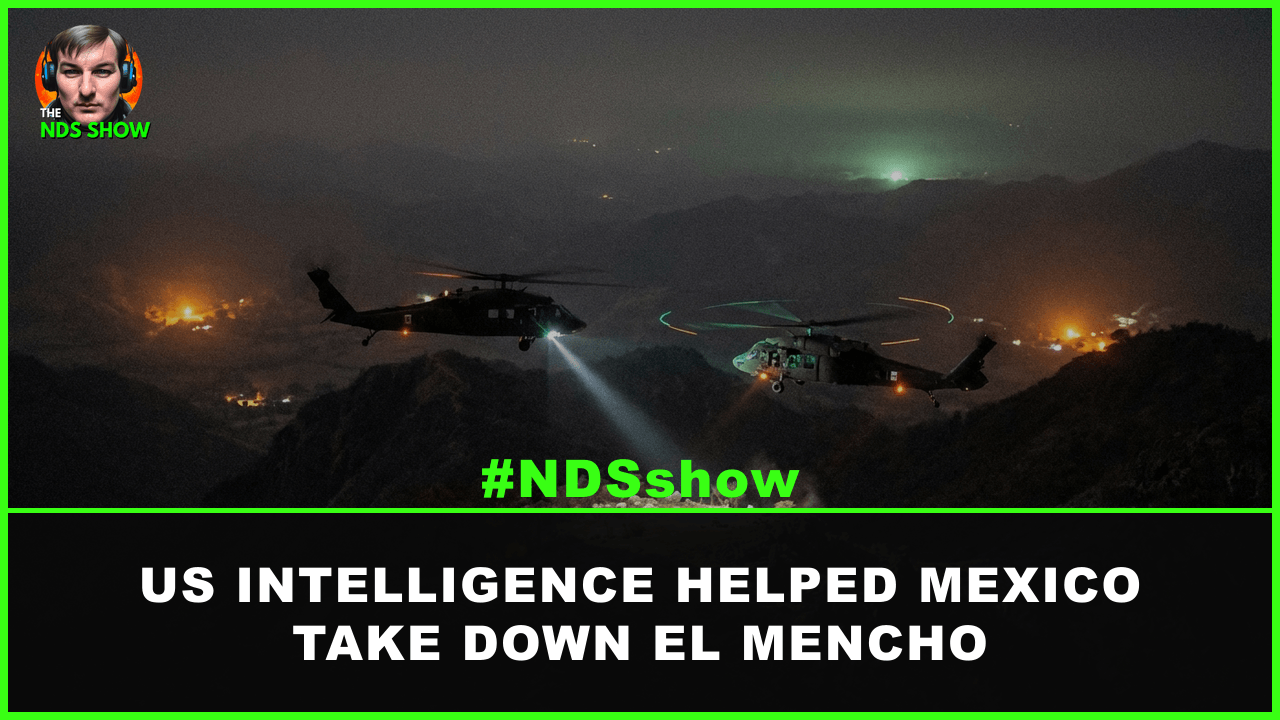
How US Intelligence Helped Mexico Kill Drug Lord El Mencho
Mexican forces killed cartel kingpin El Mencho with US intelligence support from a new Pentagon task force. Here is what happened and what comes next.
The leader of one of Mexico’s most dangerous drug cartels is dead, and U.S. intelligence played a key role in making it happen. On Sunday, Mexican military special forces killed Nemesio Oseguera Cervantes, better known as “El Mencho,” during a raid in the mountains of Jalisco. Within hours, cartel gunmen retaliated by torching vehicles and blocking highways across half a dozen Mexican states.
So what exactly happened, who was El Mencho, and what does a new U.S. military task force have to do with all of it? Let’s get into it.
The Raid That Took Down a Kingpin
Mexican army special forces and national guard troops launched the operation in Tapalpa, a small town roughly 80 miles southwest of Guadalajara. The mission was designed to capture El Mencho alive, but he was killed during the firefight. Mexico’s defense ministry confirmed the air force and military intelligence supported the ground operation.
Within minutes of the news breaking, U.S. Deputy Secretary of State Christopher Landau confirmed the kill on social media:
White House press secretary Karoline Leavitt added that the United States “provided intelligence” for the operation and commended the Mexican military for “their cooperation and successful execution.”
Who Was El Mencho?
Nemesio Oseguera was a former Mexican police officer who rose to lead the Jalisco New Generation Cartel (CJNG), one of the most violent criminal organizations on the planet. Under his command, CJNG expanded aggressively across Mexico and into international drug markets, smuggling massive quantities of cocaine, fentanyl, and methamphetamine into the United States.
The U.S. government had placed a $15 million bounty on his head, making him one of the most wanted fugitives in the Western Hemisphere. Despite years of manhunts by both Mexican and American authorities, El Mencho managed to evade capture by operating from remote mountainous areas and maintaining tight operational security. He was 60 years old at the time of his death.
The Secret U.S. Task Force Behind the Intelligence
Reuters reported exclusively that a new U.S. military-led unit called the Joint Interagency Task Force-Counter Cartel (JITF-CC) played a direct role in enabling the raid. The task force was formally launched last month under the leadership of Brigadier General Maurizio Calabrese, and its mission is to map out cartel networks on both sides of the U.S.-Mexico border.
According to a former U.S. official, American agencies compiled a “detailed target package” for El Mencho that included intelligence from U.S. law enforcement and the intelligence community. That dossier was handed to the Mexican government, which planned and executed the raid independently. No American military personnel were physically present during the operation.
The JITF-CC operate
s under U.S. Northern Command and involves multiple government agencies. Its public-facing website describes the goal as identifying, disrupting, and dismantling cartel operations that threaten the United States along the southern border. This is the first publicly known operational success linked to the task force.
Cartel Violence Erupts Across Mexico
The aftermath was immediate and brutal. CJNG operatives responded to their leader’s death by igniting chaos across multiple Mexican states. Burning vehicles blocked major highways in Jalisco, Guanajuato, Michoacan, and several other states. Businesses were torched, and gunmen fired on security forces in several cities. Travelers in popular tourist areas, including near Puerto Vallarta, reported being stranded as roads were shut down.
This kind of retaliatory violence is a hallmark of Mexican cartel operations. When authorities capture or kill a major figure, organizations often lash out to demonstrate they still wield power, even without their leader. Security analysts expect significant instability in the coming weeks as rival cartels and CJNG factions compete for control of the organization’s territory and supply routes.
What This Means for U.S.-Mexico Counter-Narcotics
El Mencho’s death represents the biggest blow to Mexico’s cartels in over a decade. For the Trump administration, which has publicly pressured Mexico to crack down on drug trafficking and even floated the idea of direct U.S. military intervention, this is a significant win. It demonstrates that intelligence cooperation between the two countries can produce results without American boots on the gr
ound.
But analysts caution against declaring victory too quickly. History shows that killing or capturing cartel leaders often creates power vacuums that spark even more violence. After Joaquin “El Chapo” Guzman’s arrest and extradition, the Sinaloa Cartel fragmented into warring factions. The same pattern could repeat with CJNG.
The real test will be whether the JITF-CC and broader U.S.-Mexico cooperation can sustain pressure on cartel networks beyond just leadership targets. Disrupting the financial infrastructure, supply chains, and mid-level operatives that keep these organizations running is far harder than taking out one person at the top.
Key Takeaways
El Mencho is dead. Mexican special forces killed the CJNG leader in a raid in Jalisco on February 22, 2026, ending years of manhunts.
U.S. intelligence was critical. A new military-led task force (JITF-CC) compiled the target package that enabled Mexico’s operation.
Retaliatory violence exploded. Cartel gunmen blocked highways and torched businesses across 6+ Mexican states within hours of the killing.
The harder fight is ahead. Killing a cartel boss creates power vacuums. Sustained pressure on networks, finances, and mid-level operators will determine long-term impact.
Watch the Full Episode
For more on U.S. law enforcement operations against Mexican cartels, including the infamous Operation Fast and Furious, check out this episode of The NDS Show with former ATF agent Peter Forcelli:
🎙️ Don’t Miss an Episode of The NDS Show
Stay informed on national defense, intelligence, and geospatial topics. Subscribe to The NDS Show on YouTube for in-depth interviews and analysis.