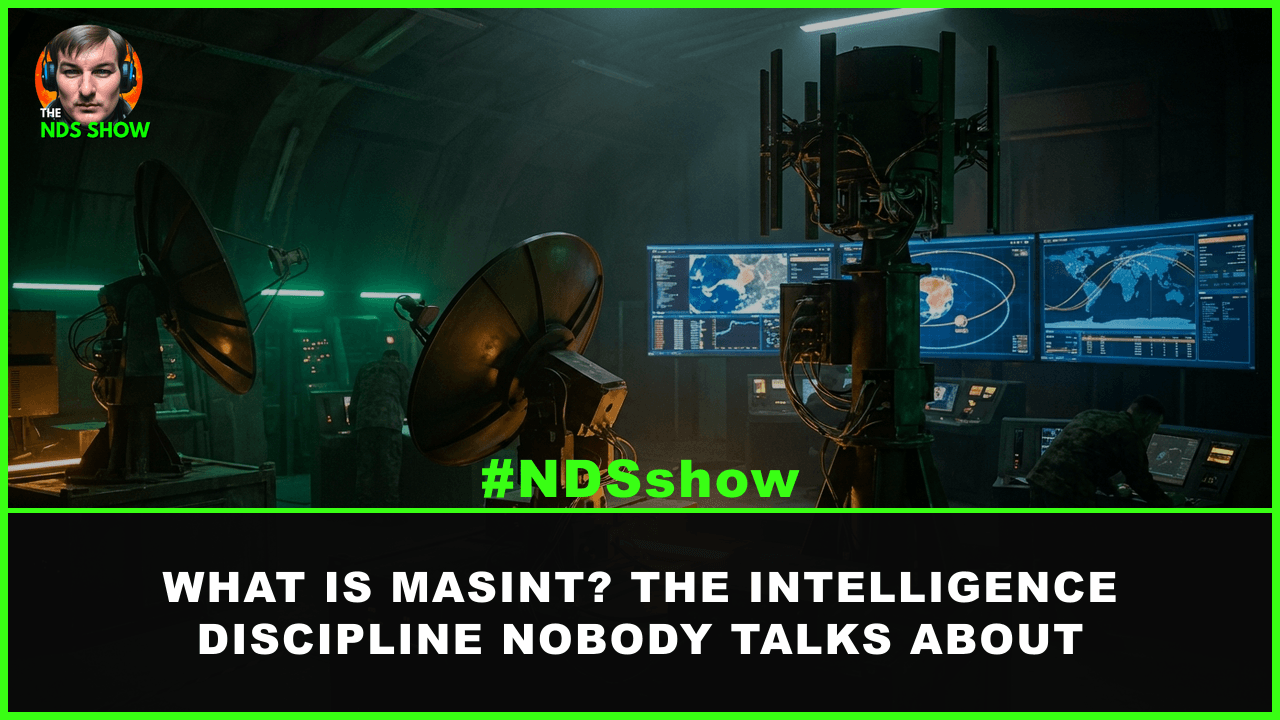
What Is MASINT? The Intelligence Discipline Nobody Talks About
MASINT is the least-known intelligence discipline, but it detects nuclear tests, tracks missiles, and identifies chemical weapons. Here’s how Measurement and Signature Intelligence works.
If you asked most people to name the intelligence disciplines, they would rattle off the usual suspects: HUMINT, SIGINT, IMINT, maybe OSINT if they have been paying attention. But there is one discipline that consistently flies under the radar, even among intelligence professionals. It is called MASINT, short for Measurement and Signatures Intelligence, and it might be the most fascinating corner of the intelligence community you have never heard of.
So What Exactly Is MASINT?
MASINT is the intelligence discipline focused on detecting, tracking, and identifying targets through their physical signatures. Think of it this way: every object and activity in the world leaves behind traces. A missile launch produces a specific heat signature. A nuclear facility emits telltale radiation patterns. Even a tank engine gives off a unique acoustic footprint. MASINT is the science of capturing and interpreting those traces.
The Department of Defense officially recognized MASINT as a distinct intelligence discipline back in 1986. The formal definition, straight from the intelligence community, describes it as “technically derived intelligence obtained by quantitative and qualitative analysis of data derived from specific technical sensors for the purpose of identifying any distinctive features associated with the source, emitter, or sender.”
Put simply: MASINT specialists look at what things do rather than what they say (that would be SIGINT) or what they look like (that would be IMINT). One MASINT expert described the discipline as “astronomy, except looking toward the earth instead of away from it.” Another called it the “CSI of the intelligence community,” because like forensic scientists, MASINT analysts piece together evidence from physical measurements that most people would never think to collect.
The Six Sub-Disciplines of MASINT
MASINT is actually an umbrella term covering six major sub-disciplines, each focused on different types of signatures. Here is a quick breakdown:
Electro-Optical MASINT captures data from light across the electromagnetic spectrum, from ultraviolet through visible and into infrared. This is how analysts can detect missile launches from space, identify camouflaged equipment, or even tell the difference between real military hardware and decoys based on their thermal signatures.
Nuclear MASINT focuses on detecting and characterizing nuclear events. This includes monitoring for nuclear weapons tests, tracking radiation from nuclear facilities, and identifying radioactive materials. The U.S. has been doing this since the late 1940s, when sensors detected the Soviet Union’s first nuclear test in 1949.
Radar MASINT goes beyond traditional radar intelligence by analyzing the unintentional characteristics of radar systems. While SIGINT might intercept a radar signal, MASINT looks at things like side lobe patterns and unintended emissions to fingerprint specific radar systems and sometimes distinguish real equipment from decoys.
Geophysical MASINT uses seismic, acoustic, and magnetic sensors to detect underground nuclear tests, submarine movements, troop movements, and other activities that create vibrations or sound waves. Think of the SOSUS underwater listening arrays that tracked Soviet submarines throughout the Cold War.
Materials MASINT involves analyzing the chemical and biological composition of materials collected from the environment. Air sampling, water analysis, and soil testing all fall under this category. It plays a critical role in detecting weapons of mass destruction and verifying arms control treaties.
Radiofrequency MASINT examines unintentional RF emissions from electronic equipment. Every electronic device leaks some electromagnetic energy, and those leaks create unique signatures that MASINT analysts can exploit to identify and track specific pieces of equipment.
Real-World Applications That Matter
MASINT sounds abstract until you see it in action. Here are some of the most important real-world applications:
Nuclear treaty verification: When the U.S. needs to confirm whether a country has conducted a nuclear test, MASINT provides the evidence. Seismic sensors detect the underground explosion. Air sampling platforms collect radioactive particles from the atmosphere. Satellite-based sensors measure the thermal and electromagnetic signatures. Together, these MASINT sources can determine not just that a test occurred, but the approximate yield and type of weapon.
Missile defense: The U.S. missile warning system relies heavily on MASINT. Space-based infrared sensors detect the heat signatures of missile launches within seconds. Radar MASINT then tracks the trajectory and helps characterize the type of missile. This is how we know almost immediately when North Korea or any other country launches a ballistic missile.
WMD detection: Finding hidden chemical, biological, or nuclear weapons programs is one of the toughest intelligence problems out there. MASINT contributes by detecting the telltale environmental signatures that weapons production creates, such as specific chemical compounds in the air near suspected facilities or unusual thermal patterns visible from satellites.
Battlefield awareness: On the tactical level, MASINT sensors help warfighters detect intruders, identify hidden threats, and distinguish friend from foe. Acoustic sensors can pinpoint the location of gunfire. Seismic sensors can detect approaching vehicles. These capabilities save lives.
Why DIA Leads the MASINT Mission
The Defense Intelligence Agency serves as the functional manager for MASINT across the intelligence community. DIA’s Central MASINT Office (now integrated into DIA’s broader structure) coordinates MASINT collection requirements, sets standards, and ensures the various MASINT capabilities across DoD and the IC work together effectively.
This makes sense when you think about it. MASINT is inherently technical and heavily tied to military sensors and defense systems. While the CIA might run human sources and the NSA dominates signals intelligence, DIA’s deep integration with defense systems makes it the natural home for the discipline that turns sensor data into actionable intelligence.
How MASINT Complements Other Intelligence Disciplines
MASINT rarely works alone. Its real power comes from how it fills gaps that other disciplines cannot cover. An imagery analyst looking at satellite photos might see a building, but MASINT can determine what is happening inside it based on thermal emissions or chemical signatures. A SIGINT analyst might intercept communications about a weapons test, but MASINT provides the physical evidence that confirms it actually happened.
William K. Moore, a MASINT expert, put it well: “MASINT looks at every intelligence indicator with new eyes and makes available new indicators as well. It measures and identifies battlespace entities via multiple means that are difficult to spoof.” That last part is critical. You can camouflage a tank from a camera, encrypt a radio transmission from SIGINT collectors, or feed false information to a human source. But fooling MASINT sensors that measure the physical properties of your equipment and activities? That is extremely difficult.
Career Opportunities in MASINT
If you are interested in a career in intelligence, MASINT offers some unique opportunities. Because the discipline is so technical, professionals come from backgrounds in physics, chemistry, engineering, and data science. DIA, the military services, and defense contractors all hire MASINT analysts, and the field is less crowded than HUMINT or SIGINT precisely because fewer people know about it.
Positions range from sensor operators and data analysts to research scientists developing next-generation MASINT capabilities. The security clearance requirements are high (TS/SCI is standard), but the work is genuinely cutting-edge. If you want to work at the intersection of science and national security, MASINT is worth a serious look.
Key Takeaways
MASINT (Measurement and Signatures Intelligence) detects and identifies targets through their physical signatures, covering six sub-disciplines: electro-optical, nuclear, radar, geophysical, materials, and radiofrequency
Real-world applications include nuclear treaty verification, missile defense early warning, WMD detection, and tactical battlefield awareness
DIA serves as the intelligence community’s lead agency for MASINT, coordinating capabilities across the Department of Defense
MASINT complements other intelligence disciplines by providing physical evidence that is extremely difficult to spoof or counterfeit
Watch the Full Episode
For a deeper dive on intelligence disciplines and national security topics, check out this episode of The NDS Show:
🎙️ Don’t Miss an Episode of The NDS Show
Stay informed on national defense, intelligence, and geospatial topics. Subscribe to The NDS Show on YouTube for in-depth interviews and analysis.