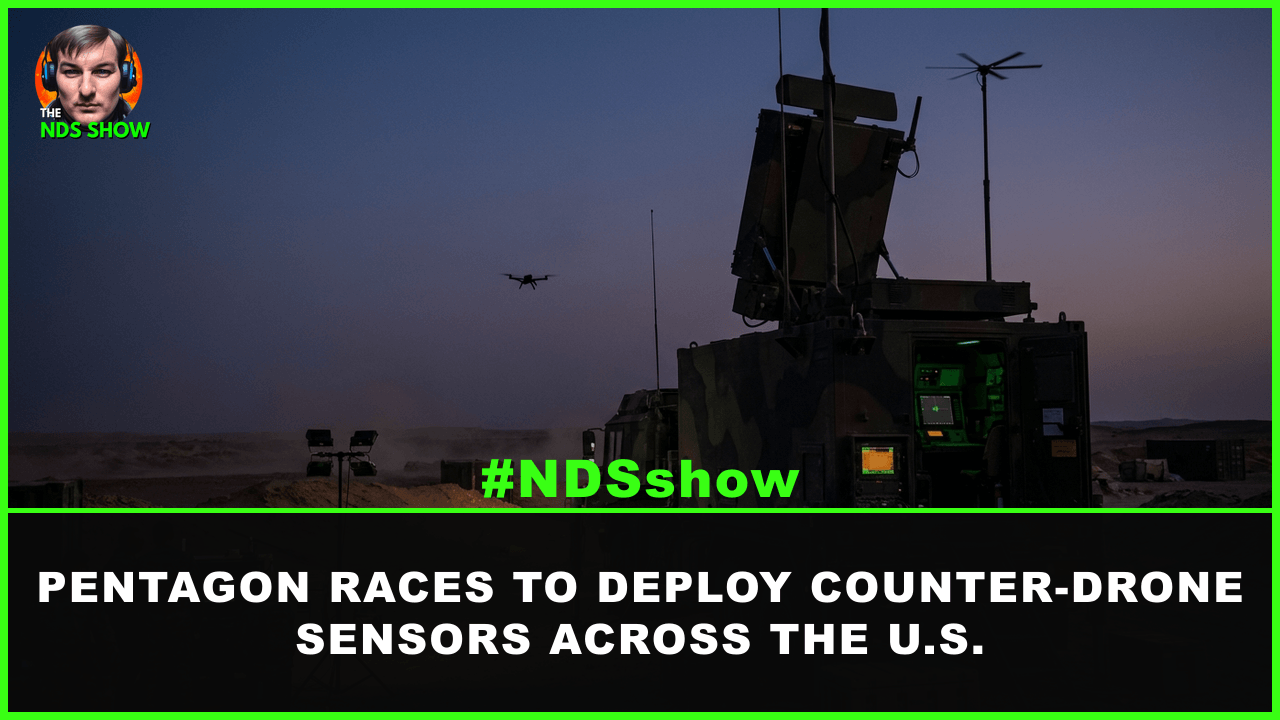
Pentagon Races to Deploy Counter-Drone Sensors After El Paso Incident
The Pentagon urgently seeks counter-drone sensors for U.S. military bases after cartel drones disrupted El Paso airspace, with spring 2026 demos planned.
The Pentagon has a drone problem, and it wants a fix fast. The Defense Innovation Unit just issued an urgent solicitation for counter-drone sensors capable of protecting U.S. military installations and critical infrastructure from small unmanned aircraft. With a spring 2026 demonstration planned at Yuma Proving Ground, Arizona, the timeline is aggressive. Companies may have just 30 days between notification and live testing.
This isn’t a hypothetical threat. Just last week, suspected cartel drones breached U.S. airspace near El Paso, Texas, forcing the FAA to temporarily close airspace around El Paso International Airport. The incident highlighted a growing vulnerability that military planners have been warning about for years: the U.S. homeland is increasingly exposed to small, cheap drones that existing air defense systems weren’t designed to handle.
What the Pentagon Is Looking For
The DIU solicitation, titled “Counter UAS Sensing for Homeland and Mobile Defense,” covers two distinct tracks.
The first focuses on fixed-site protection for installations inside the United States. These sensors need to detect Group 1 UAVs (the smallest category, under 20 pounds) at a minimum range of 2 kilometers. Bonus points for spotting Group 2 and Group 3 drones weighing up to 1,320 pounds. The systems also need to filter out false positives from birds and ground clutter, which has been a persistent headache for existing detection tools.
Every proposed solution must include a radar component, though companies can layer on additional sensing modes. The end goal is integration with government fire con
trol systems, meaning these sensors could eventually guide weapons that neutralize incoming drones.
“Solutions must operate safely near populated areas, within congested airspace, and across complex electromagnetic environments dominated by lawful emitters,” the solicitation states. That’s a polite way of saying: don’t accidentally jam cell towers or knock out Wi-Fi.
Mobile Sensors for Frontline Units
The second track is arguably more challenging. The Pentagon wants mobile counter-drone sensors that small military units can carry with them on the move. These systems face a double requirement: they need to detect incoming threats while avoiding detection themselves.
This isn’t just theoretical engineering. Ukraine’s battlefield has proven that electronic warfare emitters become targets themselves. Russian forces have learned to home in on the electromagnetic signatures of Ukrainian counter-drone systems, turning defenders into targets. The DIU explicitly referenced this challenge, requesting systems with “a low physical and spectral signature to prevent targeting by enemy forces.”
The preferred approach is passive sensing, covering a broad radio frequency spectrum from roughly 400 MHz to 8 GHz. The sensors need to detect Group 1 and 2 drones flying below 50 meters (about 164 feet), which is exactly how small reconnaissance and attack drones operate in combat zones.
These mobile systems would mount on standard military vehicles including the Infantry Squad Vehicle, Joint Light Tactical Vehicle, and the Family of Medium Tactical Vehicles. Notably, the solicitat
ion focuses on wheeled vehicles rather than armored platforms, suggesting the Pentagon sees this as a capability needed across the entire force, not just heavy combat units.
The El Paso Wake-Up Call
The timing of this solicitation isn’t coincidental. On February 9, Customs and Border Protection personnel at Fort Bliss used a classified Pentagon laser system called LOCUST to engage what they believed were cartel drones. The targets turned out to be metallic party balloons. Two days later, the FAA temporarily closed airspace within an 11-mile radius of El Paso International Airport after reports of a cartel drone incursion.
The incident was embarrassing on multiple levels. The CBP test wasn’t coordinated with the FAA, creating confusion that rippled up to the White House and Congress. Defense Secretary Pete Hegseth had approved lending the directed-energy weapon to CBP for use at Fort Bliss, whose fence line sits right on the Mexican border.
Just hours before the El Paso airspace closure, the Defense Department released a new policy consolidating roughly ten separate counter-UAS memos into a single framework. The new guidance grants base commanders expanded authority to defend against drone threats beyond their installation’s physical fence line. As the Pentagon put it: “Department of War airspace is off limits.”
Why This Matters Beyond the Military
Counter-drone technology has been a hot topic in defense circles since commercial drones started showing up over U.S. military bases several years ago. But the convergence of cartel drone activity at the southern bor
der, the lessons from Ukraine’s drone-saturated battlefield, and growing concerns about domestic critical infrastructure has pushed the issue to the front burner.
The DIU solicitation didn’t specify whether the fixed-site sensors would protect military or civilian infrastructure, but the language about operating near populated areas and congested airspace suggests both are on the table. Airports, power plants, government buildings, and military bases all face similar vulnerabilities to small, low-flying drones that conventional radar often misses.
For the defense industry, this represents a significant and growing market. Companies that can deliver reliable detection in cluttered environments with low false-alarm rates will find eager buyers across the Department of Defense and potentially other government agencies.
Key Takeaways
The Defense Innovation Unit issued an urgent solicitation for counter-drone sensors with a spring 2026 demonstration at Yuma Proving Ground.
Two tracks cover fixed-site installation protection and mobile sensors for frontline military units, with lessons from Ukraine informing the requirements.
The El Paso cartel drone incident and subsequent airspace closure underscored how vulnerable U.S. airspace remains to small, cheap unmanned systems.
New Pentagon policy consolidates counter-UAS guidance and expands commanders’ authority to engage drone threats beyond base perimeters.
Watch the Full Episode
For more on how emerging technologies are reshaping defense and intelligence, check out this episode of The ND
S Show:
🎙️ Don’t Miss an Episode of The NDS Show
Stay informed on national defense, intelligence, and geospatial topics. Subscribe to The NDS Show on YouTube for in-depth interviews and analysis.