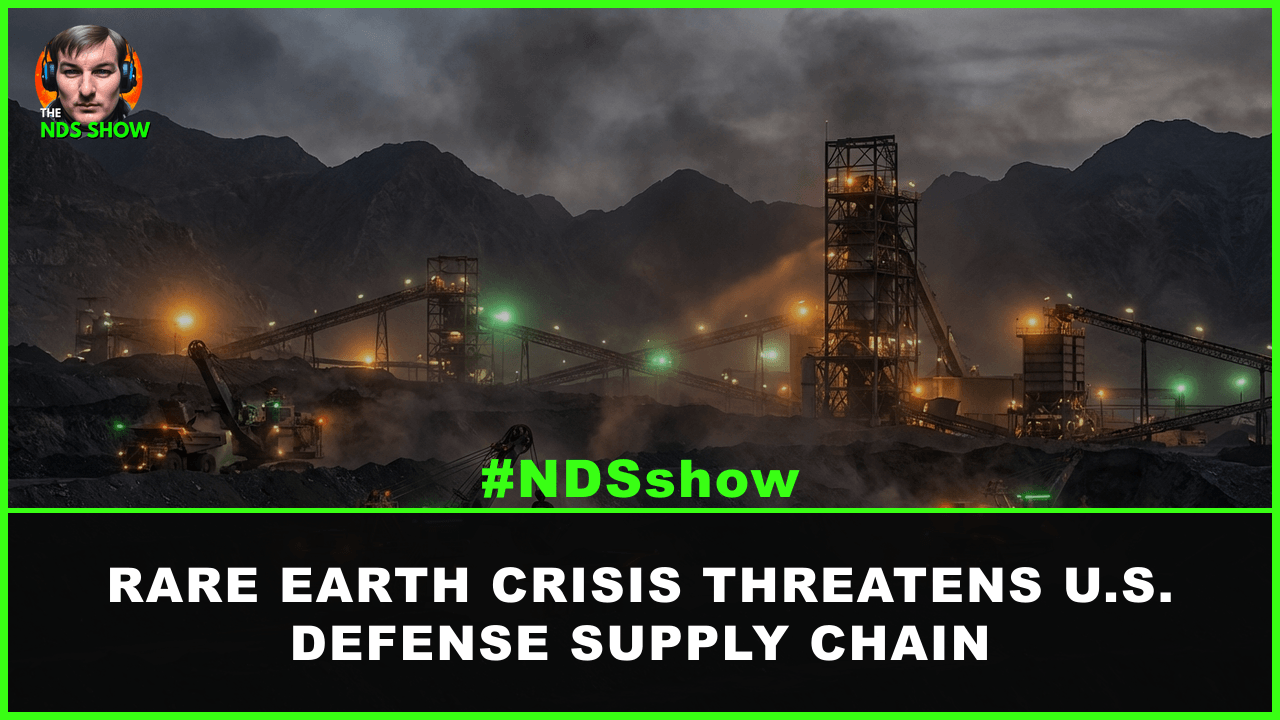
Rare Earth Crisis Threatens U.S. Defense Supply Chain
U.S. aerospace and chip suppliers face worsening rare earth shortages as China restricts exports. Yttrium prices have surged 6,900% with defense production at risk.
If you’ve ever wondered what keeps a fighter jet’s engine from melting at 2,000 degrees, the answer involves a handful of obscure minerals you’ve probably never heard of. And right now, the U.S. can’t get enough of them.
Reuters reported this week that suppliers to American aerospace and semiconductor companies face worsening shortages of rare earth elements like yttrium and scandium. Two North American suppliers have temporarily paused production. One is turning away smaller clients to conserve supply for major engine makers. The situation is getting worse, not better.
What Are Rare Earths and Why Should You Care?
Rare earth elements are a family of 17 minerals that play small but critical roles in everything from jet engines to smartphones to guided missiles. Yttrium, for example, is used in thermal barrier coatings that keep turbine engines from literally melting. Without those coatings, the engines powering F-35s, F-22s, and commercial airliners simply can’t operate.
Scandium is equally vital in the semiconductor world. It’s a key component in manufacturing 5G chips found in nearly every modern smartphone and base station. Global production amounts to just a few dozen tons per year, and the U.S. currently produces zero domestically.
Here’s the uncomfortable reality: China controls roughly 60% of global rare earth mining and over 90% of processing. That gives Beijing enormous leverage over industrie
s that are foundational to American national security.
How Did We Get Here?
When Beijing imposed export restrictions on rare earths last April, it sent shockwaves through the defense supply chain. A temporary trade detente in October was supposed to ease the pressure, with China agreeing to relax some critical mineral restrictions. But the numbers tell a different story.
Chinese customs data shows the U.S. received just 17 tons of yttrium products in the eight months after controls were introduced, compared to 333 tons in the eight months before. That’s a 95% drop. Meanwhile, yttrium prices have surged 60% since November and now sit roughly 69 times higher than a year ago.
The timing is significant. President Trump is scheduled to visit Beijing in late March for a summit with President Xi. Rare earth access will almost certainly be on the agenda, but defense contractors can’t afford to wait for diplomatic breakthroughs.
The Defense Industry Impact
So far, actual engine and chip production lines haven’t shut down. But the warning signs are flashing. Coatings manufacturers are rationing yttrium. At least one company in the supply chain has stopped selling yttrium oxide products entirely after running out of material.
Breaking Defense reported separately this week that the Pentagon’s space supply chain is also feeling the squeeze. Lockheed Ma
rtin executives flagged shortages of on-board processors, solar panels, and propulsion systems. Critical minerals and rare earth elements were highlighted as another growing bottleneck for satellite constellation programs.
For defense contractors like Lockheed Martin, Raytheon, and Northrop Grumman, this creates a cascading problem. You can build the world’s most advanced weapons systems, but if you can’t coat the engines or source the chips, production timelines slip. And in an era of great power competition, production delays aren’t just a business problem. They’re a national security risk.
Can the U.S. Break Free From China’s Grip?
There are real efforts underway to build alternative supply chains. The Trump administration has committed over $8.5 billion toward securing domestic rare earth capabilities. In early 2026, USA Rare Earth secured a $1.6 billion funding package to build what it calls the first fully integrated “mine-to-magnet” operation on American soil.
Canadian miners are also getting into the game. Apex Critical Metals was recently accepted into the Defense Industrial Base Consortium, connecting it with federal agencies focused on critical mineral security.
But building rare earth processing from scratch takes years. One industry CEO put it bluntly: competitors are “at least 3 years away from production.” And new defense procurement restrictions on materials sourced from adversary nations take effect on January 1, 2027, adding even more urgency to the timeline.
The honest assessment? The U.S. is playing catch-up on a problem that was decades
in the making. China didn’t win the rare earth race by mining alone. It won by building the entire processing ecosystem while Western nations walked away from it.
Key Takeaways
Rare earth shortages are worsening for U.S. aerospace and semiconductor suppliers, with yttrium prices up 60% and exports from China down 95%.
Defense production isn’t disrupted yet, but coatings manufacturers are rationing supply and at least two firms have paused production.
China controls the bottleneck with over 90% of rare earth processing, giving Beijing powerful leverage ahead of the Trump-Xi summit in March.
Domestic alternatives are years away despite billions in new investment, and new procurement restrictions hitting in January 2027 add pressure.
Watch the Full Episode
For more on China’s growing defense technology capabilities and what it means for U.S. national security, check out this episode of The NDS Show:
https://www.youtube.com/watch?v=ykYHQhj1_WE
🎙️ Don’t Miss an
Episode of The NDS Show
Stay informed on national defense, intelligence, and geospatial topics. Subscribe to The NDS Show on YouTube for in-depth interviews and analysis.